|
|
|
|
|
|
|
|
|
 |
 |
 |
 |
 |
 |
 |
 |
|
 |
|
|
|
|
|
|
|
|
 |
|
|||||||
 |
 |
 |
|
|||||
 |
|
|||||||
 |
 |
 |
|
|||||
 |
|
|||||||
 |
 |
 |
|
|||||
 |
|
|||||||
 |
 |
|
||||||
 |
|
|||||||
 |
 |
|
||||||
 |
|
|||||||
- Spirits of Scranton
- Matchbook
- The Hotel Casey
- Pencils
- Domestic Science
- Postage Stamps / Coins
- Circa 1910
- Framing Faith
- Holocaust Liberation
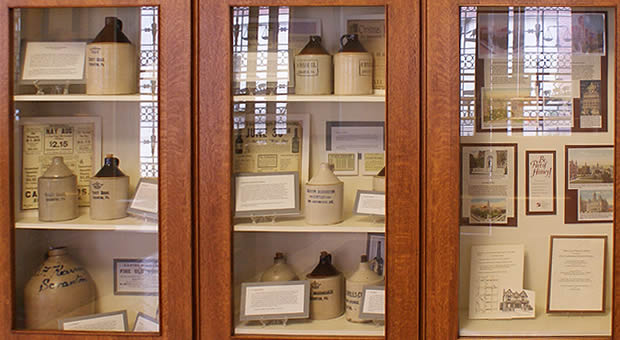
In the late 19th and early 20th century, whiskey was distilled locally and then decanted into stoneware
jugs for retail sale. Many of these jugs were made by local companies such as Evans & Co. This went
on until the start of statewide prohibition on July 1, 1919. This display at the downtown Scranton Post
Office features a collection of these jugs and accompanying newspaper advertisements. This exhibit
was prepared by LHS volunteers Ed Osman and Nick Petula.
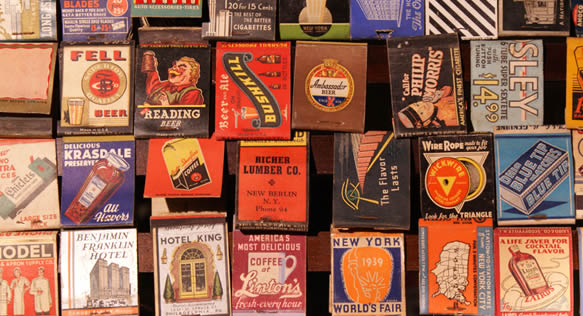
One example of the diverse collections exhibited by the LHS is the matchbook selection recently
displayed at the downtown Scranton Post Office. On loan from James Howard, the collection
illustrates the use of matchbook covers as business advertisements during the years in which
smoking was more prevalent in the U.S.
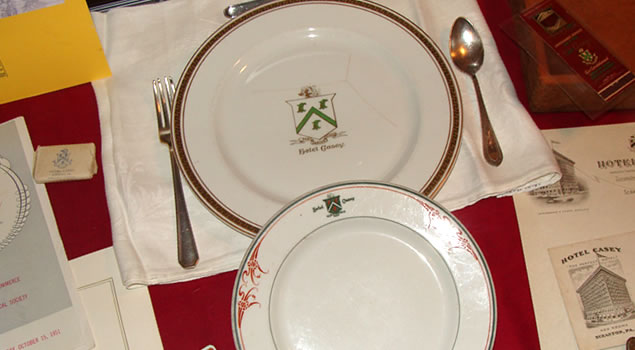
In the early 1900s, Patrick and Andrew Casey, successful owners of a wholesale liquor business, decided to
build an impressive place where their out-of-town business contacts could stay. As all Scranton would attest,
they succeeded. On March 28, 1910 the cornerstone for the Hotel Casey was laid. For decades, the hotel was considered one of the finest hotels in the area and was the site where all important visitors were honored. In
later years it fell upon hard times, finally being demolished in March of 2001. An exhibit recalling the Hotel
Casey is installed at the Catlin House. It includes artifacts from the time capsule as well as a variety of items
used in the hotel throughout the years. This exhibit was created by Dennis and Sharleen Martin.
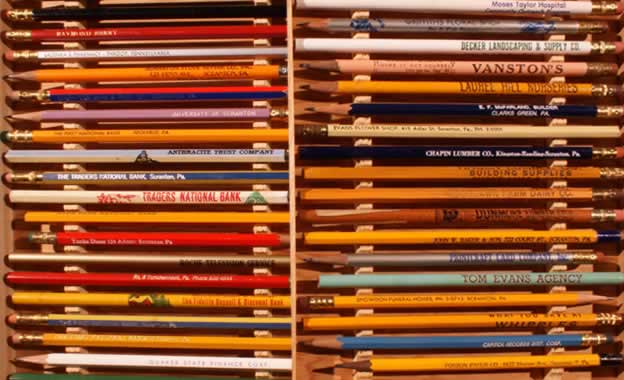
A collection on loan from James Howard demonstrates the widespread use of pencils as inexpensive
business advertisements and reminders of events or people whose names are imprinted on the instruments.
The collection, dismantled a short time ago, represents a sample of Howard’s 2,000 pencils.
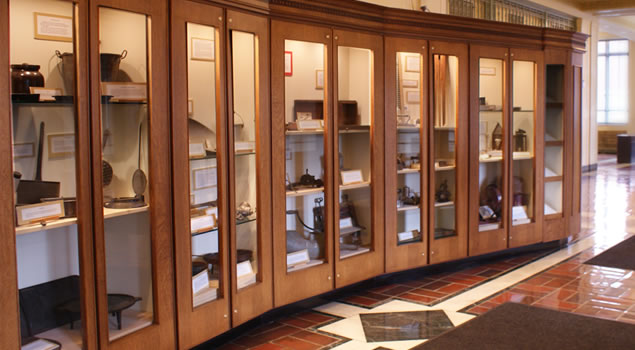
Diaries and letters from the period 1840 to1860 portray life for the majority of women at the time as teeming
with exhausting physical labor from sunup to sundown. Days were consumed by chopping and hauling wood, making and tending fires, preparing meals, lugging and heating water, and scrubbing and ironing clothes.
This exhibit provides a sample of the sometimes curious domestic tools that local people (primarily women)
used to perform everyday tasks from the late 1700s to the early 1900s. LHS volunteer Ed Osman prepared
this exhibit which is on display at the downtown Scranton Post Office.

A tribute to Black Americans filled one of the display cases at the downtown Scranton Post Office for
many months. Loaned to the LHS by Richard A. Goodall, Sr., and Richard A. Goodall, Jr., the exhibit
included stamps from the United States Postal Service’s Black Heritage series as well as commemorative
coins recognizing Black Americans who’ve made significant contributions to our nation from its inception
through recent times.
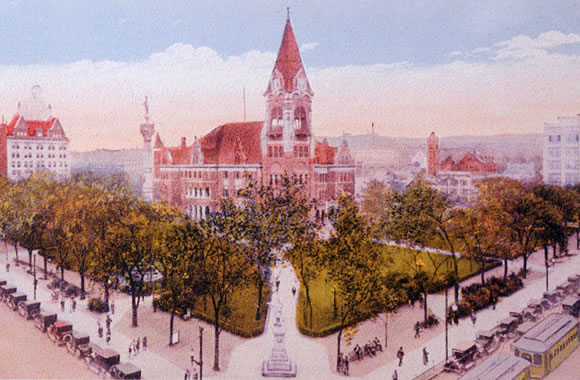
What was life like in this area a century ago? Who lived here? What did they do for employment and entertainment? How did people manage daily life and resolve problems without relying on television, radio, computers, cell phones, or any of the other “necessities” of modern life? The Circa 1910 exhibit at the Catlin House helps answer those questions by providing a glimpse of life in the early 20th Century. The exhibit was prepared using artifacts from the Lackawanna Historical Society collection and information from the Thirteenth Census of the United States. An accompanying building quiz and the related Hotel Casey exhibit also are on display at the LHS headquarters. All were organized by volunteers Dennis and Sharleen Martin.
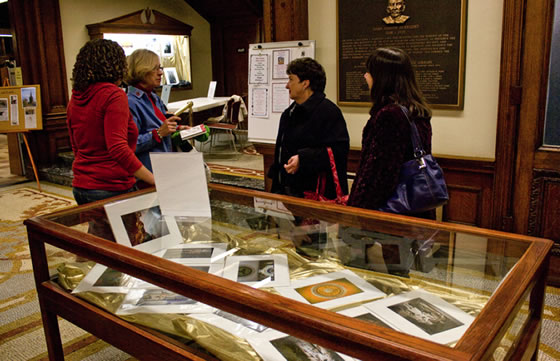
The Framing Faith exhibit documents photographically 10 Catholic churches in the Diocese of Scranton that
were closed due to parish restructuring in the years just prior to 2011. Photographer Ivana Pavelka and three
high school students captured the art, architecture, and interior style of each building to preserve visually the
unique history of each. Built by immigrants, the churches evince the deep faith and sense of community of
the people who created them. The exhibit traveled to various libraries in late 2010 and early 2011 and will
travel again later this year. In conjunction with the exhibit, LHS volunteer Sarah Piccini penned a book
about the churches which includes the images. It is scheduled for release in late spring.
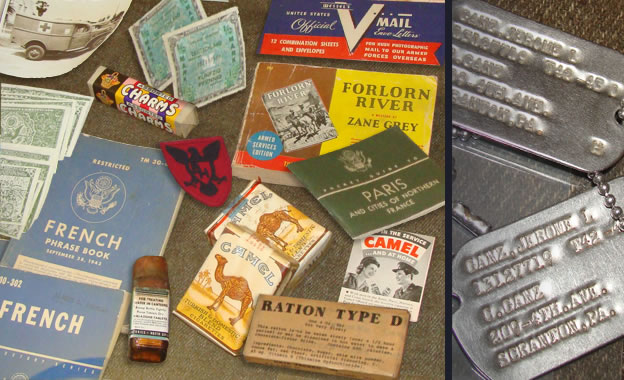
In commemoration of the 65th anniversary of the liberation of Europe and the Nazi Concentration Camps
in WWII, the LHS, in partnership with the Holocaust Education Resource Center, mounted an exhibit
focused on the Dachau and Ohrdruf camps which were liberated by the American Army in the final month
of the European Theater of Operation. Scores of veterans from northeastern Pennsylvania were among the
first to witness the horrors of the camps and many donated items for display in the exhibit. Available for
viewing at the downtown Scranton Post Office, the exhibit was prepared by LHS volunteer Ella Rayburn.